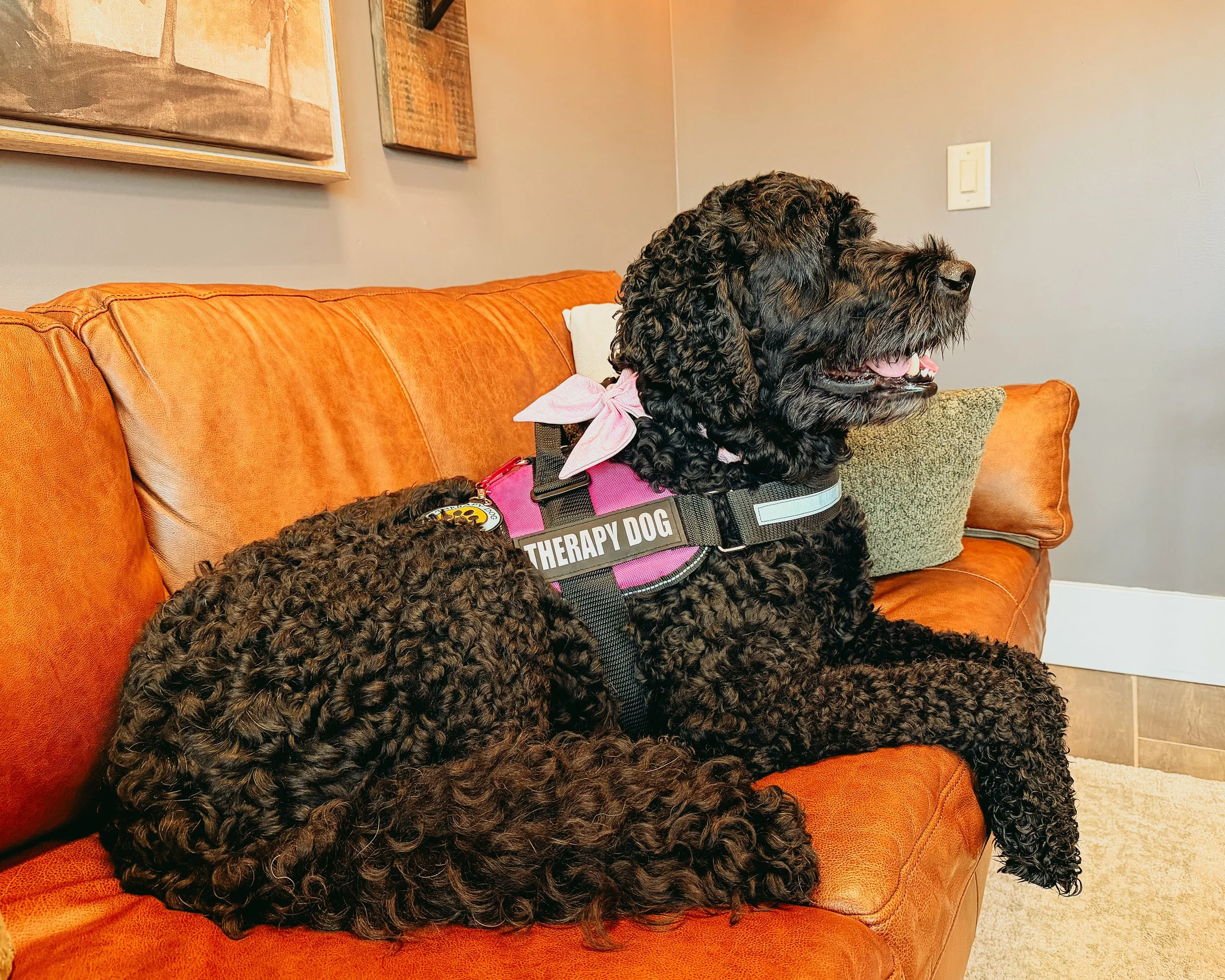
There's something uniquely comforting about the presence of an animal. The gentle rhythm of a dog breathing beside you, the warmth of a pet resting against your legs, or the quiet companionship of an animal during a difficult moment can offer a sense of connection that doesn't require words.
For many people, animals provide more than companionship. They become part of daily routines, sources of emotional comfort, and meaningful relationships that help us navigate stressful or uncertain seasons of life.
As our understanding of mental health continues to evolve, researchers and mental health professionals are exploring how interactions with animals may support emotional regulation, stress reduction, and the therapeutic process.
At River Pines Counseling in Stillwater, Minnesota, we appreciate the meaningful connection between humans, animals, and emotional well-being, including how the presence of an animal can contribute to a supportive therapeutic environment.
Why Does Being Around Animals Feel So Comforting?
Our emotional experiences aren't limited to our thoughts. Stress, anxiety, grief, and fear can influence how we feel physically, affecting muscle tension, breathing, attention, and our overall sense of safety. When we're overwhelmed, even simple interactions can feel demanding. We may struggle to organize our thoughts, communicate our emotions, or find a moment of quiet.
Animals can offer a different kind of interaction. Unlike many human relationships, spending time with an animal often comes without the expectation to explain ourselves, find the right words, or solve a problem. Their presence may encourage us to slow down, notice our surroundings, and reconnect with the present moment.
Research into human-animal interaction suggests that contact with animals may reduce psychological distress, although the strength and consistency of these effects vary across individuals and settings. A review published in the Journal of Clinical Psychology found evidence of small-to-moderate reductions in distress associated with human-animal interactions, while emphasizing the need for additional research to better understand how and when these benefits occur.
The Connection Between Animals and Nervous System Regulation
Our nervous system continually responds to information from our surroundings, including signals of potential threat, comfort, and connection.
During periods of prolonged stress, people may notice difficulty relaxing, increased irritability, restlessness, or a sense of being constantly on alert. Others may experience emotional numbness, exhaustion, or disconnection. Gentle interactions with animals may provide opportunities to practice calming and grounding skills. For example, someone experiencing anxiety might find it helpful to notice the texture of a dog's fur, the rhythm of its breathing, or the sensation of their feet resting on the floor while sitting beside an animal. These experiences can bring attention away from spiraling thoughts and toward immediate sensory information.
Researchers have also examined whether humans and animals influence one another's physiological responses during interaction. Emerging evidence suggests that changes in measures such as heart rate or stress-related physiology may sometimes occur together, although findings remain mixed.
This doesn't mean an animal can automatically regulate someone's nervous system or eliminate a stress response. Rather, a comfortable interaction with an animal may create an opportunity to experience calm, connection, and greater awareness of the body.
How Animals Can Support the Therapeutic Process
For some people, beginning therapy can feel intimidating. Talking about painful memories, difficult relationships, or deeply personal emotions requires vulnerability, and building comfort with a therapist can take time.
When thoughtfully incorporated into a session, an animal's presence may help create an atmosphere that feels more approachable.
Some clients find it easier to begin conversations while gently petting a dog or sharing space with an animal. Others appreciate having something comforting to focus on while discussing difficult experiences.
Animals can also become part of conversations about attachment, boundaries, emotional awareness, and relationships. The way someone experiences connection with an animal may offer opportunities to reflect on trust, vulnerability, caregiving, or the ability to receive comfort.
These interactions can be particularly meaningful when exploring grief, trauma, anxiety, or emotional disconnection.
Importantly, an animal's presence is not a substitute for evidence-based mental health treatment. Instead, it may serve as a complementary element of care when appropriate for the client, animal, and therapeutic setting.
Animals, Grief, and the Experience of Feeling Understood
Grief is one area where the human-animal bond can feel especially meaningful. During periods of loss, people may find themselves emotionally exhausted by conversations, decisions, and expectations. They may want connection while simultaneously feeling unable to explain what they're experiencing. An animal's companionship can offer a form of comfort that doesn't depend on conversation.
For someone grieving a loved one, caring for a pet may also provide a sense of continuity through familiar routines. Feeding, walking, or spending quiet time together can offer small moments of structure during an otherwise unpredictable period. The relationship itself can also become an important part of a person's emotional life. This is why the loss of a beloved pet can bring profound grief, sometimes complicated by the feeling that others don't fully recognize the significance of that bond.
At River Pines Counseling, we recognize that grief takes many forms and that relationships with animals can carry deep emotional meaning.
Animal-Friendly Therapy at River Pines Counseling
Creating a comfortable and welcoming therapeutic environment is an important part of our approach at River Pines Counseling. Our nature-inspired office in Stillwater reflects our appreciation for environments that encourage calm, connection, and a sense of ease.
For clients working with Darcy Stivland, the presence of a therapy-supportive dog may be available as an optional addition to sessions. This provides another way for clients who enjoy animals to experience companionship and comfort while engaging in therapeutic work. Animal involvement is always a matter of personal preference. Some clients find animals comforting, while others may prefer sessions without them because of allergies, fear, sensory needs, or simply their individual comfort level. Therapy should be responsive to the person receiving care, and the presence of an animal should never feel like an expectation.
Healing Can Include Moments of Connection
Healing doesn't always happen through conversation alone. Sometimes it also involves learning to recognize what helps us feel grounded, supported, and connected to ourselves.
For some, that connection is found through movement or time in nature. For others, it may come through creativity, meaningful relationships, or the quiet companionship of an animal.
The goal of therapy isn't to eliminate every difficult emotion. It's to develop greater awareness, understanding, and flexibility in how we respond to life's experiences.
At River Pines Counseling, we believe the environment surrounding that work matters, too.
If you're exploring therapy in Stillwater, Minnesota, we invite you to learn more about our providers, our welcoming office, and the ways we support emotional well-being.
Visit www.riverpinescounseling.com to explore our services or request an appointment.